I co-founded Immergo Labs in 2023 and I'm the CTO. Before that I spent about ten years on bio-inspired motion, working out how joints behave with different amounts of stretch and how to measure movement with machine learning. Immergo is where all of that turned into software physical therapists actually use.
Why VR
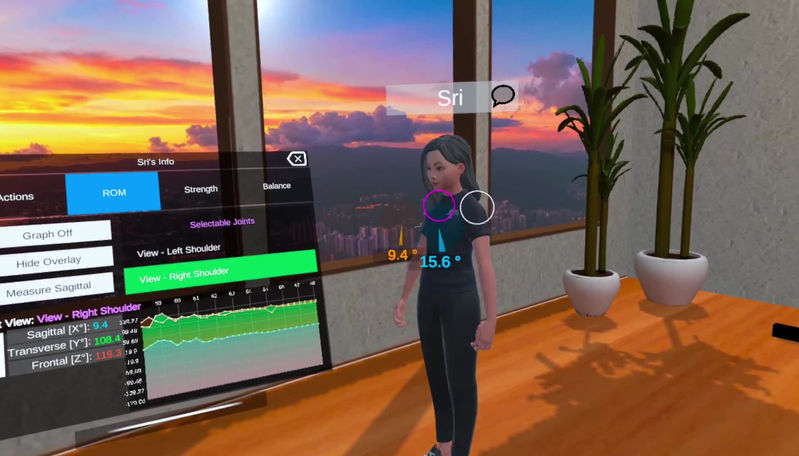
Most telehealth is a grid of video squares, which is fine for talking. Physical therapy needs more. A therapist has to see how someone stands, reaches, shifts their weight, protects a sore spot, or works around a weak joint. VR gives back some of that sense of space. The therapist and patient share a room, can look at each other, and can show each other movements like they're actually together.
What it does
While the patient moves, off-the-shelf hardware tracks joint angles, range of motion, symmetry, and compensation patterns, and the therapist sees it live. These are the same measurements I used to test exosuits and robot joints in the lab. Now they run on cheap hardware instead of a full motion capture setup. Therapists can follow progress over time and catch compensation that's easy to miss on flat video.
When the session ends, notes get drafted from what happened in the visit, so nobody has to type them up from memory later.
How it connects
Immergo comes from the same habit as the robotics work. Watch how bodies move, measure the parts that matter, and make the tool easy enough to use outside a lab. The shoulders, fingers, exosuits, and joints were all ways of asking how movement works. Immergo points that question at patient care.
Right now we're focused on making motion assessment cheaper, faster, and something you can do remotely.