Published in Robotics and Autonomous Systems, 2022.
Authors: Ash Robbins, M. Ho, M. Teodorescu
Animal limbs aren't fully rigid or fully soft. Bone holds the shape, cartilage gives a little, and ligaments stretch just enough under load. We built robot joints along the same lines, with a rigid skeleton and elastic ligaments, hoping to get some of the precision of a robot arm and some of the give of a real one.
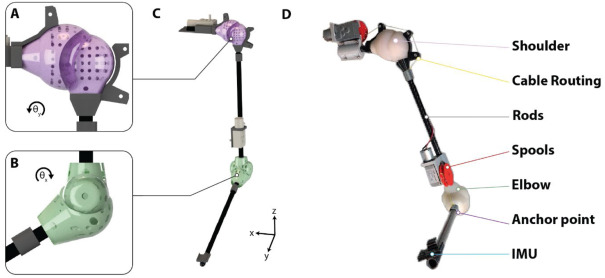
Controlling it
Joints like this are a pain to model by hand, so we didn't. We trained a controller with Soft Actor-Critic (SAC), a reinforcement learning method, and let it figure out the joint by moving it.
Right away it beat a standard PID controller in 6 of 9 test cases. After a short round of retraining it beat PID in all 9. You can also change how the joint behaves by swapping in different ligaments, and fine-tune the controller for whatever job you need.
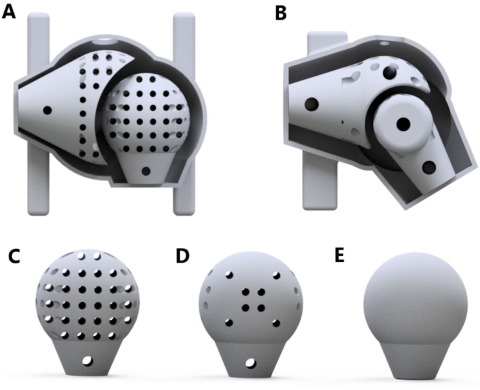
What I took from it
Rigid robots are strong, but they aren't great to be around. Soft robots are gentle but hard to control. A joint somewhere in between is a nice compromise. What stood out was how well RL handled the soft parts. The stretch that makes these joints hard for model-based control didn't bother it much.